3D Printing Industry Advancing the Sustainable Development Goals (SDGs)
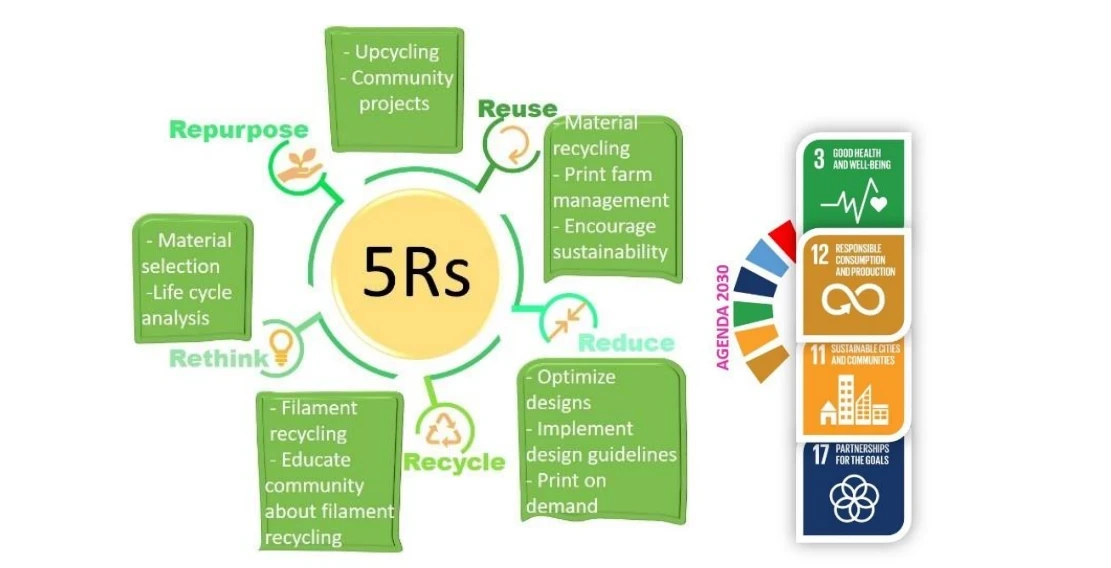
The 5 R's of sustainable development in 3D printing industry
The utilization of additive manufacturing (AM) brings forth a multitude of benefits, including the creation of customizable healthcare products tailored to individual needs, as well as contributing to environmental sustainability through streamlined supply chains and reducing material usage. It is a game-changer for surgical precision and innovation, promoting sustainability and design efficiency across various sectors. Spreading awareness and promoting waste management practices among staff and customers is crucial for the success of the industry. Training programs and educational campaigns can help employees understand the importance of waste management and provide them with the knowledge and tools necessary to implement sustainable practices. Communicating the organization's commitment to a better environment to the customers and stakeholders can also create a positive impact and encourage broader adoption of sustainability practices. This aligns closely with several sustainable development goals (SDGs), promoting sustainable practices and fostering global development:
1. SDG 3: Good Health and Well-being - Reduce: By minimizing material waste and energy consumption, 3D printing reduces environmental pollution associated with traditional manufacturing processes and supports quality care. - Reuse: 3D printing enables the reuse of materials and components, contributing to cost-effective healthcare solutions such as prosthetics and medical devices.
2. SDG 12: Responsible Consumption and Production - Recycle: 3D printing allows for the recycling of materials, promoting circular economy principles and reducing resource depletion. - Repurpose: The ability to repurpose materials and products in 3D printing supports sustainable consumption patterns and reduces waste generation.
3. SDG 11: Sustainable Cities and Communities - Reduce: By decentralizing production and enabling localized manufacturing, 3D printing reduces the need for transportation and associated emissions, contributing to cleaner and more sustainable urban environments. - Reuse: Repurposing and reusing materials in 3D printing contribute to resource efficiency and waste reduction, fostering resilient and sustainable communities.
4. SDG 17: Partnerships for the Goals - Rethink: Collaborative partnerships in 3D printing facilitate knowledge sharing, technology transfer, capacity building, promoting innovation, and sustainable development globally.
The process is also repeatable, accurate, and cost-effective for small production runs, allowing the reliable production of customized parts. It has diverse applications in a variety of industries such as prototyping and product development, customized manufacturing, medical and dental, architectural and construction innovations, art and designs, education, and research.
Researchers are investigating sustainable materials and processes to further reduce the environmental footprint of 3D printing technology. New materials will emerge, further expanding the possibilities and allowing for the creation of functional end-use products
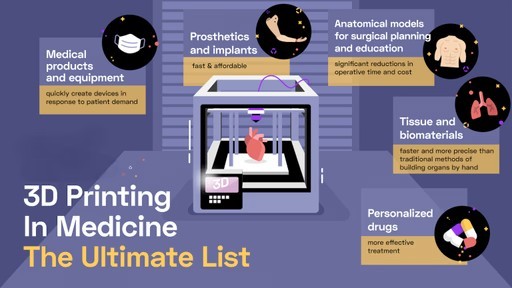
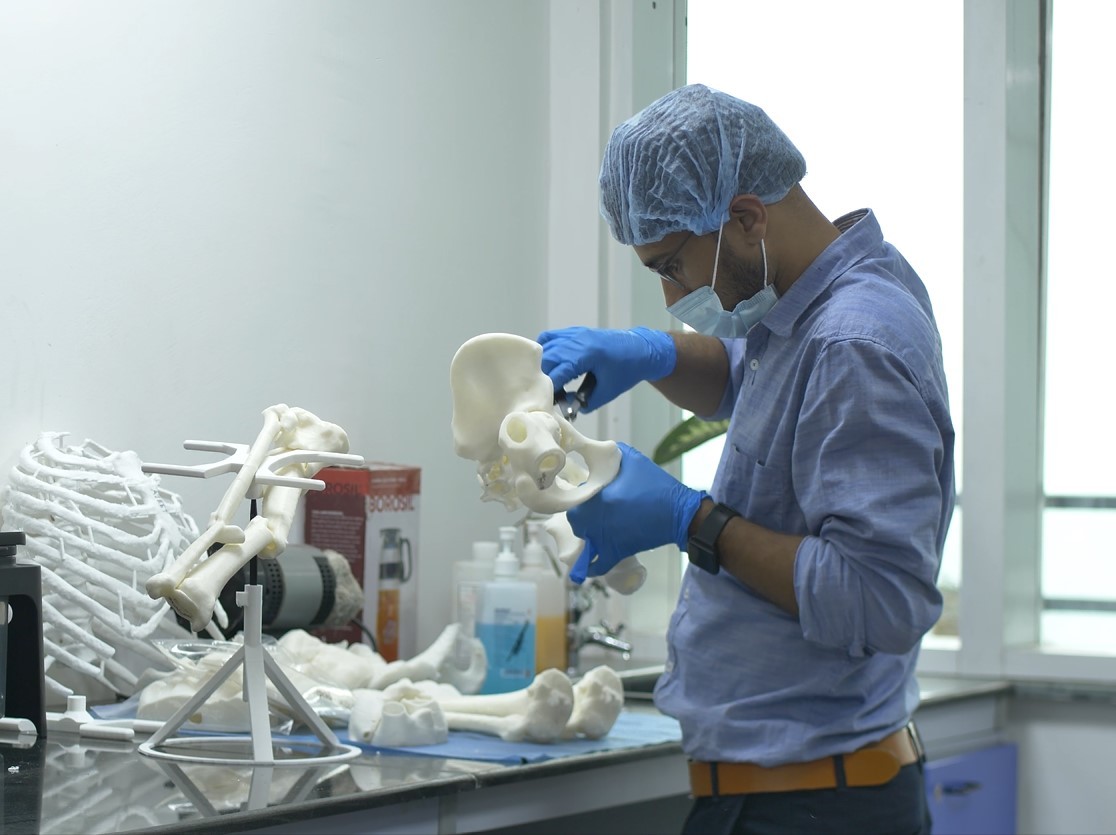
3D printing manufacturing incorporates the 5R's concept (Reduce, Reuse, Recycle, Repurpose, and Rethink). It can help engineers and designers quickly and cheaply create optimized designs by implementing design guidelines, which is impossible to achieve with traditional manufacturing methods. It promotes efficient and sustainable practices by enabling customization and on-demand production, reducing the inventory and transportation costs. Through additive manufacturing, materials can be recycled and reused through print farm management or production settings. Medical applications for 3DP are expanding rapidly and revolutionizing diagnostic and interventional medicine. Bio-printing could transform healthcare by enabling the production of replacement organs and tissues.
 |
|---|